Blog 1: Intellectual Freedom
In the library field, librarians have traditionally been champions of intellectual freedom. As future school librarians, it is essential that we remember this is equally essential in our area of service as well. This can feel a bit dicey at times, as it is only appropriate when working with youth to be aware of what is age appropriate and this is something that teachers and administrators often have to consider and discuss when purchasing whole class texts. However, in the library, students need to have the freedom of inquiry, to ask any question, to research any topic, to check out any book. As librarians "we need to educate superintendents [and principals] about the role of the First Amendment in education and the principle of intellectual freedom" (Adams, 2016). If we will do this, we will be more likely to have their support if there are issues or challenges.
One of the areas where students in school libraries are regularly denied intellectual freedom is in the over-filtering of the internet by the school or district's IT department. This is done in an effort to be compliant to the Children's Internet Protection Act (CIPA), but most schools over-filter out of a fear that something harmful or inappropriate will get through. As a result, the students ability to research is severely hindered. Not only for their personal interests, but for their required school projects. Rather than "fear-based" (Adams, 2016) filtering, it would be better to increase education in how to seek out information in the real world, as laid out in the ISTE and AASL standards.
ISTE has a standard that specifically addresses gathering information called Knowledge Constructor.
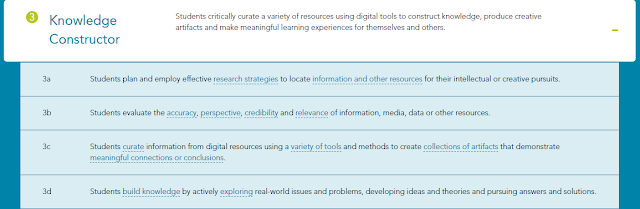
This standard specifically instructs educators, in this case librarians, the vital importance of teaching students how to appropriately gather information. While all of these apply to gathering information from the internet, 3b and 3c are particularly relevant in the case of arguing for less restrictions on internet filtering.
In the AASL standards, both Inquire and Explore address these same ideas.


By incorporating both sets of standards, librarians can better champion the ideals of intellectual freedom, educate administrators of the vital importance that students have in this regard, and teach students to better search out and gather information and be better informed.
References
Adams, H.R. (2016). 65 years and counting AASL and school librarians--Still champions of intellectual freedom. Knowledge Quest, 45(1), 34-41.
ISTE standards for students. (2019). Retrieved from https://www.iste.org/standards/for-students
Shared Foundation infographics. (2017-2018). American Library Association. Retrieved from https://standards.aasl.org/project/foundations/
One of the areas where students in school libraries are regularly denied intellectual freedom is in the over-filtering of the internet by the school or district's IT department. This is done in an effort to be compliant to the Children's Internet Protection Act (CIPA), but most schools over-filter out of a fear that something harmful or inappropriate will get through. As a result, the students ability to research is severely hindered. Not only for their personal interests, but for their required school projects. Rather than "fear-based" (Adams, 2016) filtering, it would be better to increase education in how to seek out information in the real world, as laid out in the ISTE and AASL standards.
ISTE has a standard that specifically addresses gathering information called Knowledge Constructor.

This standard specifically instructs educators, in this case librarians, the vital importance of teaching students how to appropriately gather information. While all of these apply to gathering information from the internet, 3b and 3c are particularly relevant in the case of arguing for less restrictions on internet filtering.
In the AASL standards, both Inquire and Explore address these same ideas.


By incorporating both sets of standards, librarians can better champion the ideals of intellectual freedom, educate administrators of the vital importance that students have in this regard, and teach students to better search out and gather information and be better informed.
References
Adams, H.R. (2016). 65 years and counting AASL and school librarians--Still champions of intellectual freedom. Knowledge Quest, 45(1), 34-41.
ISTE standards for students. (2019). Retrieved from https://www.iste.org/standards/for-students
Shared Foundation infographics. (2017-2018). American Library Association. Retrieved from https://standards.aasl.org/project/foundations/
Comments
Post a Comment